
Reducing Time to Flower in Dahlias -Michigan State University Extension
March 20, 2026 | 1 min to read
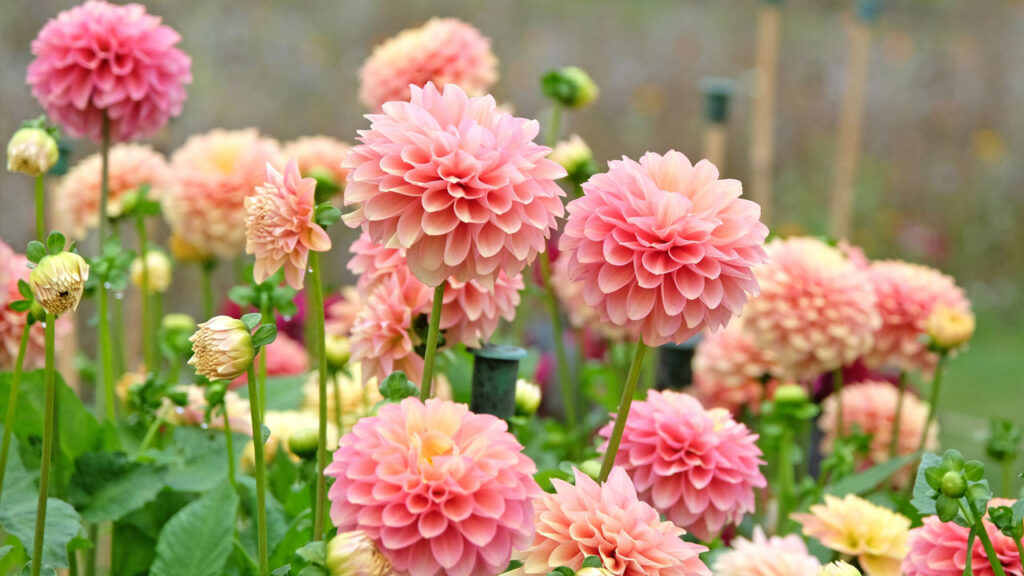
Greenhouse growers report delayed or inconsistent flowering in potted dahlia. A new MSU study shows that five to 10 short days are enough to reduce the time to flower while minimizing tuber production.
Michigan is the third-largest producer of greenhouse-grown floriculture crops in the United States. However, growers report that improperly timed flowering in dahlia (Dahlia × hybrida) is a common problem, either delayed flowering resulting in overgrown plants or early flowering when plants are small.
Dahlias are classified as either day-neutral or facultative short-day (SD) plants. Day-neutral plants do not require a specific day length to initiate flowering, while facultative SD plants flower more quickly when the plant receives short days (less than 13 hours of daylight). To solve this problem, Roberto Lopez, PhD, a Michigan State University Extension floriculture specialist, and his colleagues sought to determine how many SDs are required to induce flowering under non-inductive natural long days (LD) during early to mid-summer. Their objective was to determine the number of SDs required to induce flowering in different Dahlia cultivars sold as potted annuals, without reducing flower count or inducing unwanted tubers.
To read the rest of the story, please go to: Michigan State University Extension