
Aquaculture Stewardship Council (ASC) and Chamber of Aquaculture Join Forces to Strengthen Ghana’s Farmed Seafood Sector
July 1, 2025 | 4 min to read
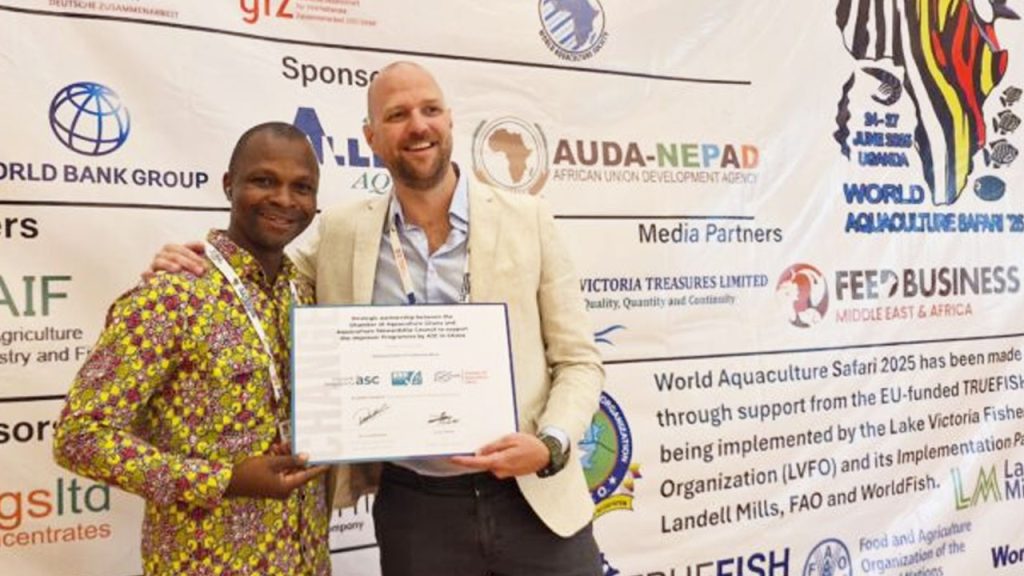
Entebbe, Uganda – In a move to strengthen Ghana’s seafood farming industry, Aquaculture Stewardship Council (ASC) and the Chamber of Aquaculture Ghana (COA) have signed a strategic Memorandum of Understanding (MoU) aimed at transforming farmed fish production towards sustainability, traceability, and global market alignment.
This dynamic partnership brings together global expertise and local leadership to drive improvements across environmental, social, and operational practices in Ghana’s rapidly expanding fish farming sector.
At the heart of the collaboration is the Improver Programme by ASC– a hands-on, step-by-step approach helping local fish farms raise the bar on responsible farming. The Improver Programme by ASC is designed to support farms not yet ready for certification, but committed to improving aquaculture performance. Through the Improver Programme, ASC and COA aim to develop a local Code of Good Practices (CoGP), which builds on the science and multistakeholder dialogues of the ASC Farm Standard, but is tailored to the local context of fish farming in Ghana.
ASC Improver Programme head Roy van Daatselaar said, “This partnership is a game-changer for Ghana’s seafood farming future. We’re proud to work alongside the Chamber of Aquaculture to help farmers improve practices through the development of the CoGP, strengthen market opportunities, and build a future towards Ghana’s sustainable development.”
Jacob Adzikah, CEO of the Chamber of Aquaculture Ghana said, “The Aquaculture Improvement Project under the Improver Programme by ASC will reshape the aquaculture scene in Ghana by allowing businesses to reach international markets that seek certified farmed fish, while also drawing in new investment to the country’s aquaculture industry. The project is a step-by-step initiative that would help farms improve their practices in areas like sustainability, food safety, and social responsibility, with the ultimate goal of achieving ASC certification and meeting global standards.”
Key highlights of the partnership include:
- Enhanced Traceability and Transparency: The AIP and CoGP will improve traceability systems, allowing consumers and businesses to better understand the origin and production methods of aquaculture products in Ghana.
- Market Access and Certification: The AIP and CoGP will prepare sector stakeholders for potential future certification which can improve access to international markets where consumers demand certified, sustainably produced aquaculture productions.
Roy added, “Through this partnership, the Chamber of Aquaculture Ghana and the ASC aim to position Ghana as a regional leader in the Blue Foods space. By developing a locally owned CoGP aligned with international standards, we can empower the sector with the tools and knowledge to improve socially and environmentally responsible operations, and prepare the industry to meet growing global demand for responsibly sourced seafood.
“This MoU sets the foundation for collaboration, mutual support, and shared vision in strengthening Ghana’s aquaculture ecosystem, while contributing to broader global goals around food security, environmental protection, and sustainable livelihoods.”
About the Aquaculture Stewardship Council (ASC)
The Standard is Changing… for fish, farm, planet and people.
ASC is driving the world’s leading certification programme, accelerating progress towards environmental sustainability and social responsibility.
The ASC Farm Standard addresses all key impacts, setting the standard for seafood farming globally and providing the highest assurance, integrity and transparency throughout the supply chain.
Our vision is a world where aquaculture plays a major role in supplying food and social benefits for humanity whilst minimising negative impacts on the environment.
Our standards ensure that seafood with the ASC label has been farmed with care.