
Support Builds for the Safer Shrimp Imports Act
May 4, 2026 | 5 min to read
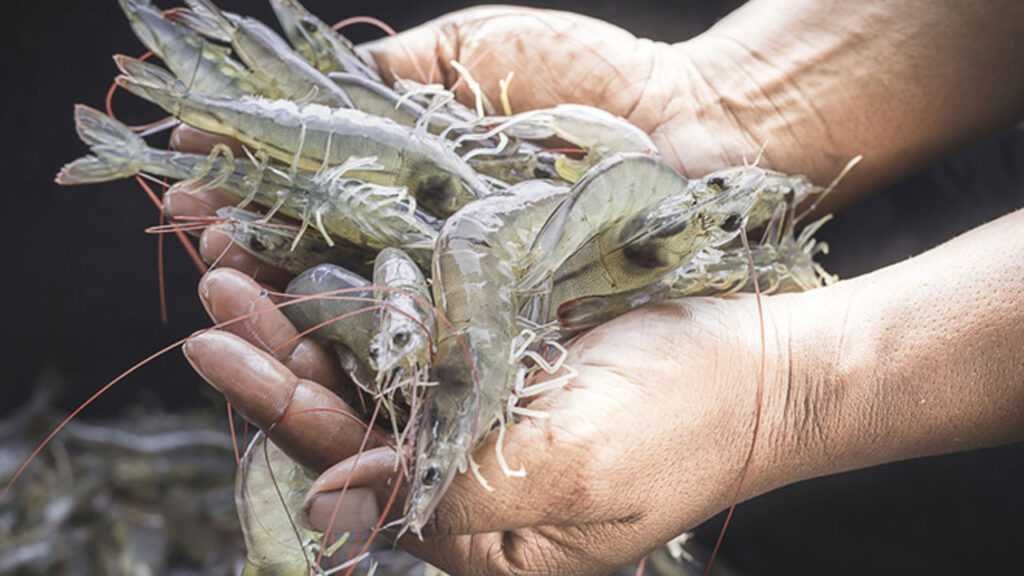
At the House Energy and Commerce Health Subcommittee hearing on “Healthier America: Legislative Proposals on the Regulation and Oversight of Food,” lawmakers and experts discussed the Safer Shrimp Imports Act (H.R. 3324).
The bill’s concept is simple: if foreign countries want to sell shrimp in the U.S. market, they must prove their food safety systems are just as rigorous as ours.
Representative Troy Carter (D-LA), a co-sponsor of the legislation, questioned the Executive Director of the Association of Food and Drug Officials (AFDO), Steven Mandernach, about the value of imposing an equivalence standard on shrimp imports.
“I agree. The American producers should be on an equal playing field with the foreign producers, and equivalency is one option and is definitely something that should be explored,” testified Mandernach, who represents state and local regulatory agencies responsible for enforcing food, drug, and consumer protection laws.
The Shrimp Gap: A 98% Risk
Currently, over 90% of the shrimp consumed in the United States is imported, mostly from farms India, Ecuador, Vietnam, and Indonesia. However, our current regulatory framework to ensure food safety is surprisingly thin for America’s favorite seafood.
Unlike USDA-regulated proteins, such as meat, poultry, eggs, and even catfish and pangasius, the FDA does not require foreign governments to prove their safety standards match ours before they ship shrimp. Instead, the FDA relies on a border inspection system that is statistically failing:
- The FDA examines 2.2% of seafood imports and samples only 0.4%.
- Less than 0.1% of seafood imports are actually tested for banned substances, such as prohibited antibiotics, leaving a substantial risk that massive volumes of contaminated seafood is imported daily.
- The FDA conducts, on average, 9,270 inspections of food facilities each year for the use of Hazard Analysis and Critical Control Points (HACCP) food safety management programs. However, only 917 of those inspections – less than 10% – are of foreign food facilities, despite 94% of shrimp consumption originating from them.
- The FDA relies upon importers to verify the safety of seafood sold into the U.S. market, but the foreign companies themselves often act as the importer of record.
The Safer Shrimp Imports Act helps close that gap. The bipartisan legislation is a companion bill to Senator Cindy Hyde-Smith’s (R-MS) bill, S. 667, which was introduced in February 2025. The House version introduced by Rep. Mike Ezell (R-MS), Rep. Troy Carter (D-LA), Rep. Julia Letlow (R-LA), Rep. Randy Weber (R-TX), and Rep. Daniel Webster (R-FL) in the House, would prohibit the importation of shrimp from any country whose government has not entered into an inspection arrangement with the FDA or whose food inspection system has not been deemed equivalent to that of the United States. The bill also directs the FDA to seek inspection arrangements with every country that exports shrimp to the U.S. within 180 days of enactment.
What is at stake for consumers
The consequences of the current seafood safety system are not hypothetical. The FDA has repeatedly refused shipments of shrimp found to be contaminated with banned antibiotics and fungicides — substances prohibited in food production due to public health risks, including their role in driving antimicrobial resistance. In 2025, the FDA refused 93 entry lines of shrimp for reasons related to banned antibiotics and fungicides, the 6th highest total in over two decades. Academic studies find foreign shrimp aquaculture plays a role in creating and spreading bacteria resistant to multiple classes of antibiotics, including some of our most powerful ones.
The Certification Myth
Many consumers look for “third-party certifications” to feel safer about the supply chains of seafood they purchase, but the data suggests these labels often fail to live up to their promises. In the first quarter of 2026, 85.7% of shrimp entry lines with antibiotic-related FDA refusals originated from processors certified under the Best Aquaculture Practices (BAP) program.
The Name Change Loophole
Without a government-backed equivalence requirement, foreign exporters can and do exploit the system. For example, the FDA refused a shrimp shipment for veterinary drug residues from the Chinese company “Rudong Zhengxiong Trade Co., Ltd.” in March 2025. The FDA refused three more entry lines from “Zhengxiong (Rudong) Trade Co., Ltd.” the following month.
Under the current system, a clerical tweak such as a name change can evade scrutiny.
What is at Stake for American Shrimpers
American shrimpers operate under strict environmental, labor, and food safety regulations. This creates an unfair marketplace where domestic producers are undercut by competitors who sacrifice human health for higher yields. Such double standards have contributed to a decades-long erosion of the American shrimping industry, the world’s most sustainable shrimp trawl fishery.
“There is no justification for continuing to apply different standards to U.S. and foreign producers selling shrimp in our market,” said Blake Price, director of the Southern Shrimp Alliance. “American consumers and producers deserve a better system—one similar to that of other proteins. It is time we demand that the shrimp sold to the U.S. is as safe as the shrimp caught in our own waters.”
The testimony from the Association of Food and Drug Officials adds to the growing record of expert support for the legislation. SSA calls upon the Health Subcommittee to advance the Safer Shrimp Imports Act without delay.
About the Southern Shrimp Alliance
The Southern Shrimp Alliance (SSA) is an organization of shrimp fishermen, shrimp processors, and other members of the domestic industry in the eight warmwater shrimp producing states of Alabama, Florida, Georgia, Louisiana, Mississippi, North Carolina, South Carolina, and Texas.