
Japan’s Government Advised to Halt Investments in Octopus Farming
May 18, 2026 | 6 min to read
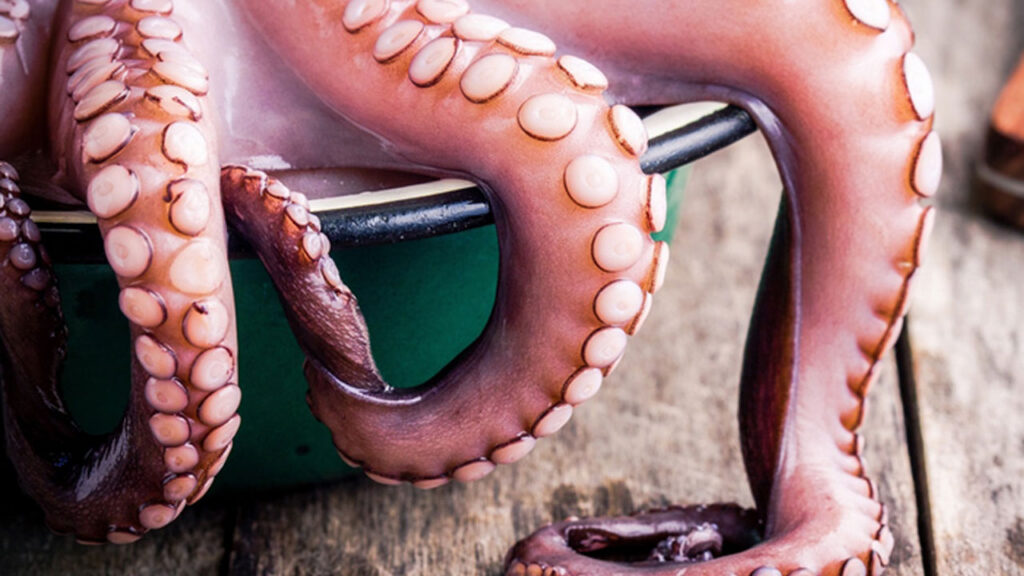
Over 180 organizations urge the Japan Science and Technology Agency to reevaluate funding octopus farming research, citing severe welfare, environmental, and ethical risks
Saitama, Japan – As legislations that ban octopus farming and the sale of farmed octopus products proceed worldwide, the government of Japan has been advised to review the allocation of public research funding aimed at enabling industrialized octopus farming, a practice that has dangerous implications for animal welfare, ecosystem integrity, and public health. The Aquatic Animal Alliance (AAA), a coalition of 182 organizations from 75 countries, along with renowned scientists and veterinarians, submitted the official correspondence to the Japan Science and Technology Agency on May 9.
Led by the AAA, a global coalition working to improve the welfare of aquatic animals in the food system, with local support from Animal Rights Center Japan and technical input from Aquatic Life Institute, the letter shares that current research suggests no viable pathways to achieving high-welfare farming or ecosystem-neutral farming for octopuses. Due to this, the coalition requests a reevaluation of the alignment between current or prospective funding streams related to octopus aquaculture and broader commitments to responsible research and innovation.
“At a time when governments around the world are moving to prohibit octopus farming due to serious welfare, environmental, and public health concerns, we urge Japan to show similar leadership by redirecting public investment toward food system innovations that do not depend on the intensive confinement of highly intelligent and sentient animals. Public research funding should advance solutions that align with long term sustainability, scientific responsibility, and ethical progress.”
— Catalina Lopez Salazar, Director of the Aquatic Animal Alliance
Recent peer reviewed research conducted in Japan illustrates the ongoing scientific interest in developing techniques for commercial octopus aquaculture, while also indicating financial support for this endeavor from the Japan Science and Technology Agency. Parallel efforts are also underway within other institutions in Japan, such as research initiatives connected with AiCephLab LLC and academic partners that examine the technological and feed requirements necessary to develop commercial production of various cephalopod species. It is clear that cephalopod aquaculture has become an active field of investigation across several research institutions in Japan.
This call for divestment from Japan’s government is preceded by legislation worldwide that bans octopus farming and the sale of products from industrial octopus farms, including a federal bill in the United States that is underway, as well as laws in Washington state and California. Legislative proposals to ban octopus farming have also been introduced at the federal level and in more states such as Hawai’i, New Jersey, Oregon, New York, North Carolina, Massachusetts and Connecticut, and countries such as Chile, Spain and Mexico.
A growing global body of scientific literature documents the ethical and practical impossibility of farming octopuses at any scale. The letter details research on concerns about sentience, severe environmental impacts, public health risks, impact on traditional fishing communities, and an absence of approved humane slaughter methods. These carnivorous animals require diets rich in marine ingredients, exacerbating the pressure on already declining wild fish populations and undermining global sustainable development goals. The overuse of antibiotics in aquaculture has been linked to the emergence of multidrug-resistant bacteria, with potential spillover effects into human populations. As widely documented, octopuses are highly intelligent and complex animals that suffer greatly in captivity due to their solitary and inquisitive nature. Several scientists have raised significant concerns about the practice of octopus farming, as conditions of intensive farming and extreme confinement are inherently unsuitable for their well-being, leading to stress, aggression, and unnatural behaviors such as cannibalism.
The coalition encourages the Japan Science and Technology Agency to redirect research investment toward marine food system innovations that present fewer welfare and environmental concerns, including seaweed and bivalve cultivation, ecosystem restoration, and more.
About Aquatic Life Institute
Aquatic Life Institute is an international non-profit organization that works on advancing aquatic animal welfare in both aquaculture and wild capture fisheries globally. The organization works with certifiers, nonprofits, academic institutions, industry stakeholders, governments, and the public to improve welfare of aquatic animals.