
Copeland Releases FY2025 Global Impact Report Highlighting Energy Efficiency, Safety and Innovation Progress
July 1, 2026 | 2 min to read
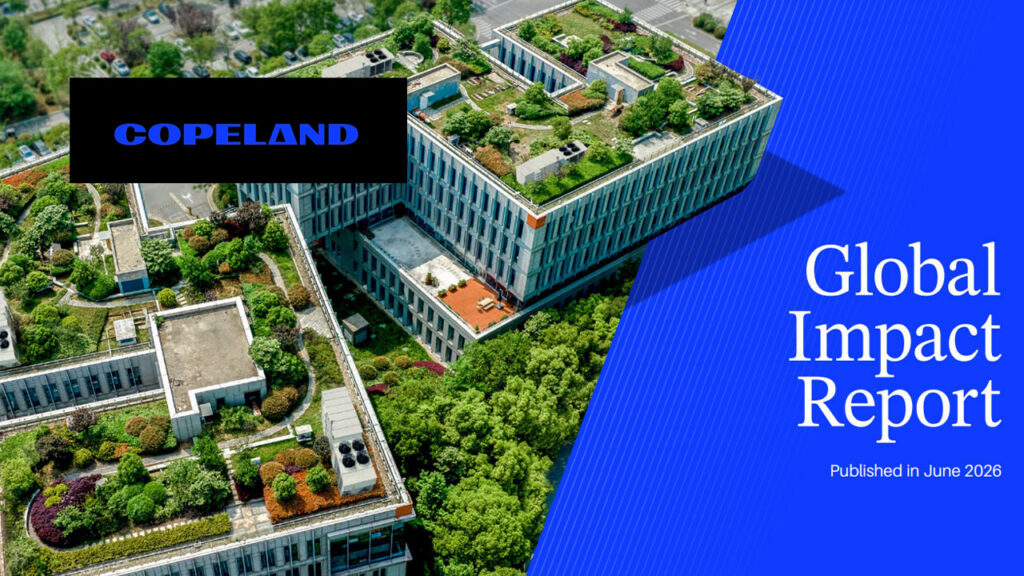
ST. LOUIS — Copeland, a global supplier of compression technologies and controls solutions, has released its second annual Global Impact Report. The report highlights the company’s Fiscal Year 2025 (FY25) progress across environmental sustainability, workplace safety and community impact, guided by its Purpose, Performance and People pillars.
Based in St. Louis, Copeland is a global supplier in sustainable heating, cooling and refrigeration compression technologies and controls solutions for cold chain, commercial, industrial and residential markets.
“True environmental impact is realized when sustainability is woven into both our daily operations and our collaborative product engineering,” said Tracy Reiter, Copeland’s chief transformation & sustainability officer.
Copeland has advanced its sustainability commitments through three strategic areas of focus:
- Performance-Driven Decarbonization: Copeland reduced Scope 1 and Scope greenhouse gas emissions by 20% year-over-year, advancing toward its Science Based Targets initiative (SBTi)-validated goal of a 55% absolute reduction by FY33, using FY23 as a baseline. Renewable energy procurement and onsite solar generation accounted for 58% of total global electricity use.
- Aligned Innovation: Copeland dedicated more than 4% of annual revenue to engineering, research and new product development in FY25. The company also accelerated average product testing and engineering cycles by 15%, supporting faster development of sustainable solutions.
- People and Culture: Copeland reduced its global Total Recordable Incident Rate (TRIR) by 22% to 0.21, remaining well below the industry average. Colleague engagement scores also rose above the 90th percentile of the manufacturing industry benchmark.
This progress supports key global trends, including the energy transition, adoption of lower-GWP and natural refrigerants, and a more resilient cold chain for food and pharmaceutical products.
“True environmental impact is realized when sustainability is woven into both our daily operations and our collaborative product engineering,” said Tracy Reiter, Copeland’s chief transformation & sustainability officer. “While our validated SBTi targets set our long-term trajectory, the near-term wins come from applying the rigor of the Copeland Business System to our shared value chain. Connecting our operational discipline with environmental performance allows us to deliver next-generation solutions that directly advance our customers’ efficiency goals.”