
FDA Advises Restaurants and Retailers Not to Serve or Sell and Consumers Not to Eat Certain Frozen, Raw, Half-shell Oysters from Republic of Korea Potentially Contaminated with Norovirus
July 25, 2025 | 5 min to read
Audience
- Restaurants and food retailers in Arizona (AZ), California (CA), Colorado (CO), Montana (MT), and Utah (UT) that have purchased frozen, raw, half-shell oysters with lot code: B250112, harvested from Designated Area No. 1 in the Republic of Korea (ROK) on Jan. 12, 2025, and processed by JBR KR-15-SP in Tongyeong-si, ROK.
- Consumers in AZ, CA, CO, MT, and UT who have purchased frozen, raw, half-shell oysters with lot code: B250112, harvested from Designated Area No. 1 in the Republic of Korea (ROK) on Jan. 12, 2025, and processed by JBR KR-15-SP in Tongyeong-si, ROK.
Product
- Certain frozen, raw, half-shell oysters processed by JBR KR-15-SP, harvested on Jan. 12, 2025, from harvest area Designated Area No. 1 in the Republic of Korea (ROK). The implicated products include Lot Code: B250112. The frozen, raw, half-shell oysters were distributed to restaurants and retailers in AZ, CA, CO, MT, and UT and may have been distributed to other states as well.
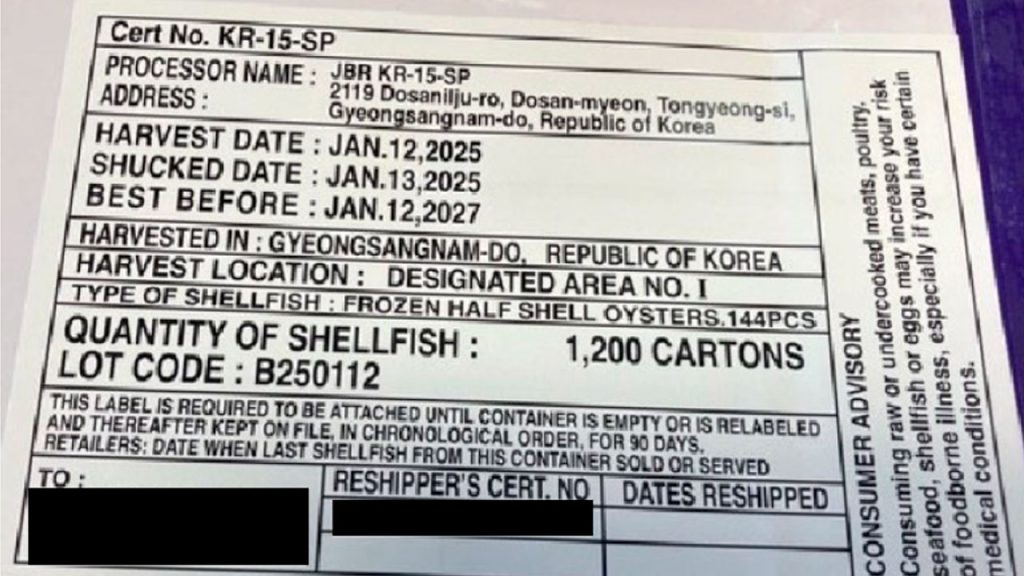
The photo below is included for reference as an example of product tag/label that would be included on cartons of frozen, raw, half-shell oysters with Lot Code: B250112.
Purpose
Wang Globalnet of Vernon, CA has recalledExternal Link Disclaimer (https://www.issc.org/news-noticesExternal Link Disclaimer) frozen, raw, half-shell oysters with Lot Code: B250112, harvested from Designated Area No. 1 in the Republic of Korea (ROK) on Jan. 12, 2025 and processed by JBR KR-15-SP in Tongyeong-si, ROK because they may be contaminated with norovirus. The FDA is advising consumers not to eat and restaurants and food retailers not to serve or sell and to dispose of these frozen, raw, half-shell oysters that were distributed in AZ, CA, CO, MT, and UT, and may have been distributed to other states as well.
Shellfish, such as oysters, contaminated with norovirus can cause illness if eaten, and potentially severe illness in people with compromised immune systems. Food containing norovirus may look, smell, and taste normal. Consumers of these products who are experiencing symptoms of illness should contact their healthcare provider and report their symptoms to their local Health Department. Diarrhea, abdominal cramps, nausea, vomiting, and fever may be associated with gastroenteritis infections caused by this organism.
Symptoms of Norovirus
People of all ages can get infected and sick with norovirus. The most common symptoms of norovirus are diarrhea, vomiting, nausea, and stomach pain. Other symptoms include fever, headache, and body ache.
A person usually develops symptoms 12 to 48 hours after being exposed to norovirus. Most people with norovirus illness get better within 1 to 3 days.
If you have norovirus illness, you can feel extremely ill, and vomit or have diarrhea many times a day. This can lead to dehydration, especially in young children, older adults, and people with other illnesses. Symptoms of dehydration include decrease in urination, dry mouth and throat, and feeling dizzy when standing up. Children who are dehydrated may cry with few or no tears and be unusually sleepy or fussy.
If you think you or someone you are caring for is severely dehydrated, call your healthcare provider.
Summary of Problem and Scope
On July 16, 2025, the Utah Department of Agriculture and Food informed the FDA of an outbreak of norovirus illnesses associated with consumption of certain oysters from the Republic of Korea with Lot Code: B250112 harvested from Designated Area No. 1 in the ROK on Jan. 12, 2025, and processed by JBR KR-15-SP in Tongyeong-si, ROK. The product was recalled by Wang Globalnet of Vernon, CA on July 21, 2025.
FDA Actions
The FDA is issuing this alert advising restaurants and food retailers not to serve or sell and consumers not to eat frozen, raw, half-shell oysters with Lot Code: B250112, harvested from Designated Area No. 1 in the Republic of Korea (ROK) on Jan. 12, 2025, and processed by JBR KR-15-SP in Tongyeong-si, ROK, and distributed in AZ, CA, CO, MT and UT, due to possible norovirus contamination. The FDA is awaiting further information on distribution of these frozen, raw, half-shell oysters and will continue to monitor the investigation and provide assistance to state authorities as needed. As new information becomes available, the FDA intends to update the safety alert.
Recommendations for Restaurants and Retailers
Restaurants and retailers should not serve or sell the potentially contaminated frozen, raw, half-shell oysters. Restaurants and retailers should dispose of any products by throwing them in the garbage or contacting their distributor to arrange for destruction.
Restaurants and retailers should also be aware that shellfish may be a source of pathogens and should control the potential for cross-contamination of food processing equipment and the food processing environment. Their employees should follow the steps below:
- Wash hands with warm water and soap following the cleaning and sanitation process.
- Retailers, restaurants, and other food service operators who have processed and packaged any potentially contaminated products need to be concerned about cross-contamination of cutting surfaces and utensils through contact with the potentially contaminated products.
- Retailers that have sold bulk product should clean and sanitize the containers used to hold the product.
- Regular frequent cleaning and sanitizing of food contact surfaces and utensils used in food preparation may help to minimize the likelihood of cross-contamination.