
Effects of Continuous Application of 1-MCP on Carnations to Prevent Ethylene Damage
July 15, 2024 | 1 min to read
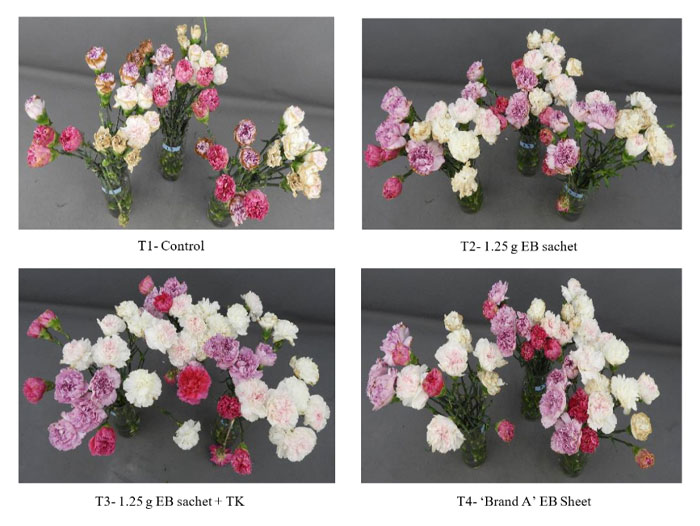
The damage caused by ethylene is a major factor affecting the quality of cut flowers during the postharvest phase. Carnations are highly sensitive to ethylene. The sensitivity to ethylene varies depending on the cultivar and is a critical factor in determining the longevity of Carnations. Ethylene signaling is dependent on the perception of the ethylene molecule by receptors located in plant cells.
The technology of 1-methylcyclopropene (1-MCP) is most commonly used during cut flower transport to prevent ethylene injury by binding with ethylene receptors and blocking the ethylene action. However, 1-MCP does not stay on the receptor permanently, and new ethylene receptors are constantly generated in plant cells during later stages of transportation and storage.
Therefore, plants treated with 1-MCP at the farm level can regain ethylene sensitivity post-treatment. In this research, we investigated the effect of a second 1-MCP treatment to prevent successive ethylene damage.
To read the rest of the story, please go to: FloraLife