
Study Finds No or Low PFAS Levels in Wild Alaska Seafood
August 31, 2026 | 3 min to read
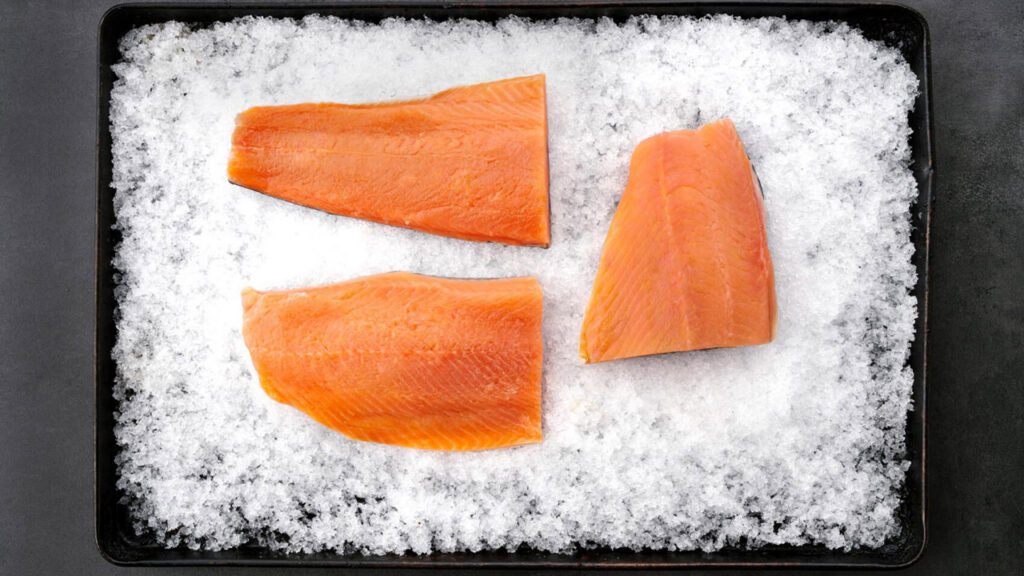
JUNEAU, Alaska — The Alaska Seafood Marketing Institute (ASMI) is highlighting findings from a newly published peer-reviewed study (external link) that found many of the most popular wild Alaska seafood contains low or non-detectable levels of per- and polyfluoroalkyl substances (PFAS), commonly referred to as “forever chemicals.” The study provides new peer-reviewed baseline data on PFAS concentrations in commercially harvested Alaska seafood, helping inform consumers, public health officials and seafood buyers with evidence from Alaska-harvested species.
“This study provides an important scientific baseline for commercially harvested Alaska seafood,” said John Burrows, Technical Director for ASMI and a co-author of the study. “By testing seafood collected across Alaska’s major fishing regions, the research adds peer-reviewed data that can help inform consumers, seafood buyers and public health officials.”
The study analyzed edible tissue from 11 commercially important fish and shellfish species harvested in Alaska waters, including all five species of salmon, halibut, cod, pollock, sablefish, bairdi crab and red king crab. Researchers analyzed samples for 40 PFAS compounds and detected only 10, with most measurements below laboratory quantification limits.
The study found:
- Most PFAS compounds were not detected or were present only at trace levels.
- All five species of wild Pacific salmon had no PFAS concentrations above laboratory quantification limits.
- Coho salmon and red king crab had no detectable PFAS.
- The highest PFAS concentration measured remained below the European Union’s maximum level for fish consumption.
Researchers concluded that PFAS concentrations in the species tested were low and unlikely to represent a significant source of dietary exposure. The authors note that seafood provides high-quality protein, omega-3 fatty acids, vitamins and essential minerals, and conclude that, given the minimal PFAS detected in the species tested, health risk associated with PFAS is low.
Samples were collected from commercially harvested seafood across the Bering Sea, Gulf of Alaska and Southeast Alaska between 2022 and 2024. Because samples were collected near the beginning of the seafood supply chain, before processing, the authors state the results closely reflect PFAS levels in Alaska’s marine environment.
About Alaska Seafood Marketing Institute:
The Alaska Seafood Marketing Institute (ASMI) is a partnership between the State of Alaska and the Alaska seafood industry promoting the benefits of wild and sustainable Alaska seafood and offering seafood industry education. The seafood industry is Alaska’s largest basic private sector employer with nearly 60% of all wild seafood and 90-95% of wild salmon harvested in the U.S. coming from Alaska. In addition to wild salmon, Alaska is known for its crab and whitefish varieties such as Pacific cod, sablefish, halibut, Alaska pollock, sole and rockfish – available fresh or frozen year-round.
Alaska has been dedicated to sustainable seafood for more than 50 years and is the only state with a constitution that mandates all seafood be managed under the sustained yield principle. Alaska has taken a leadership role in setting the global standard for precautionary resource management to protect fisheries and surrounding habitats for future generations and leading to an ever-replenishing supply of wild seafood for markets worldwide.