
New Benchmark Exposes Material Environmental and Social Risks Across Global Seafood Sector
June 2, 2026 | 5 min to read
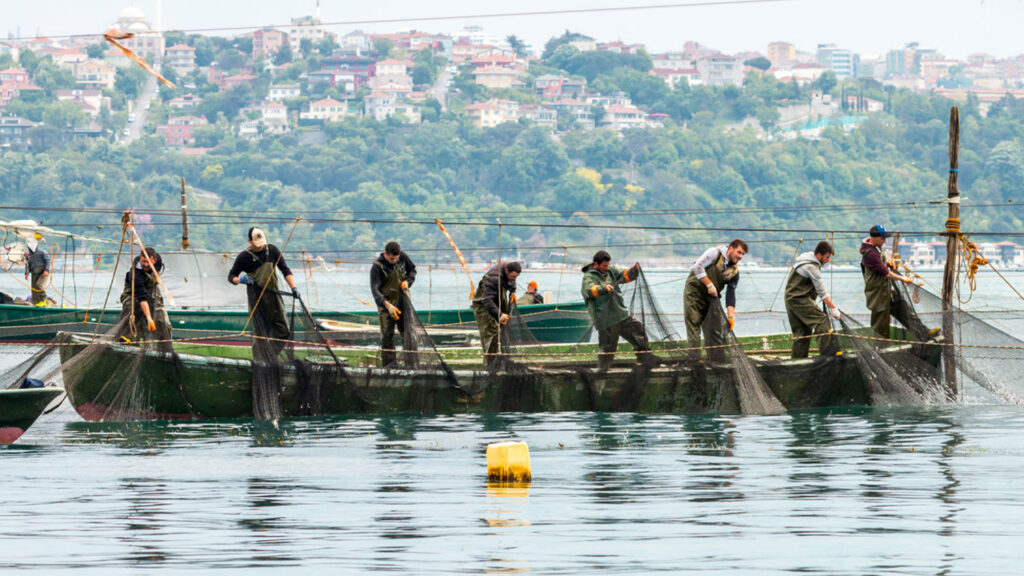
FAIRR launches new investor tool challenging overly positive assumptions about seafood sustainability – revealing weak company preparedness on pollution, implementation and future‑proofing, alongside missed growth opportunities.
The $95tn FAIRR Initiative is launching the Coller FAIRR Seafood Index, a new benchmark assessing the approach of the world’s biggest seafood companies to the social, health and environmental consequences of their operations. Often considered a lower‑impact alternative to other animal proteins, the seafood sector may have enjoyed overly positive perceptions due to the lack of an industry-specific benchmark – until now.
The Coller FAIRR Seafood Index scores the world’s 20 largest listed seafood companies* – suppliers to supermarkets including Tesco, Sainsbury’s, Morrisons, Lawson, Casino and Ahold Delhaize – on areas that are most important to drive a seafood sector that is sustainable for nature, people and long-term investors. These topics include modern slavery, pollution and food safety, among others**. The Coller FAIRR Seafood Index benchmarks the maturity of a company’s response to environmental and social risks and opportunities, rather than identifying how sustainable the company’s operations are***. Of the companies, 40% are headquartered in APAC, 40% are in Europe and 20% are in North and Latin America.
The Coller FAIRR Seafood Index finds:
- Companies score better on social risks than environmental topics: The Index tracks how companies are addressing modern slavery and child labour, worker representation and workforce wellbeing. It finds that the companies score better on social issues, with an average score of 39/100, than for environmental topics, where they score 25/100. Mowi scores the highest of the companies for its approach to social risks, at 69/100.
- Of nature and climate topics, companies are least prepared to tackle the risks linked to pollution: FAIRR assesses topics such as greenhouse gas emissions, deforestation, pollution and ecosystem impacts. Companies score particularly low on pollution (19/100), which includes effluent discharge from salmon farms, marine litter from pens and fishing gear chemical contamination. Global wholesale company Sysco, the parent company of Brakes, ranks worst across nature and climate topics, scoring 6/100.
- Uneven considerations for food quality and health risks: The Index tracks the extent to which companies are addressing food safety risks such as pathogens, histamines, and heavy metals. The scores for food safety are among the highest of the Index, averaging 43/100. But the data reveals far less sophisticated approaches to antibiotic stewardship (27/100) and animal welfare (26/100), which significantly undermine food quality and increase risks to consumer health.
- Untapped opportunities for more sustainable seafood products: On average, companies score 11/100 for their approach to more sustainable products. This includes protein diversification – meaning the expansion of portfolios into plant-based and alternative proteins – and unfed aquaculture – referring to the farming of species such as mussels and macroalgae that require no external feed input and are among the most ecologically efficient forms of seafood production. Asian companies are more cognisant of these opportunities, with three of the top five businesses in the ranking for opportunities based in Asia (Umios, Nissui, Thai Union). However, some companies in Norway and Chile are investing in aquaculture of mussels and seaweed, which are unfed.
- Poor scoring on evidence of implementation and outcomes: When assessed on the execution of the environmental and social strategies and progress on key performance indicators, companies score just 25/100 and 23/100, respectively. This underlines the urgent need for companies to go further than paper commitments and demonstrate transparently and concretely how they are monitoring and progressing on outcomes.
- Traceability remains problematic across wild-caught and farmed fish: The 20 companies score 27/100 on average on this topic, leaving consumers globally exposed to mislabelling provenance, species and even potentially illegally caught seafood.
Looking below the surface of corporate disclosures
The Coller FAIRR Seafood Index offers a thorough assessment of complex, sector-specific, qualitative corporate disclosures, including policies and supplier codes of conduct as well as credible third‑party data sources, such as CDP. The in-depth assessment aims to provide both a forward-looking benchmark of whether companies have a mature approach to risks, with credible strategies in place to drive positive progress in the coming years, as well as a reflection of on-the-ground performance, revealed by the outcome metrics in the Index.
While this provides a robust basis for comparison, the findings rely on transparency from the companies assessed. The Index shows regional gaps, such as lower scores among Asian companies that are partly explained by the relatively lower adoption of global reporting standards as well as weaker practices. Yet, even in Europe, disclosures for many metrics on issues such as farmed fish mortality and water pollution remain unregulated and relatively undefined, which can make comparisons across companies difficult and create discrepancies between what is reported and real-world impacts.
Investors can use the Coller FAIRR Seafood Index for:
- Investment integration: Investors can integrate data from the Index into their decision-making models and processes to drive capital allocation to the best-performing companies.
- Stewardship: Investors can leverage the findings from the Index in their stewardship activities, such as engaging with companies to adopt specific practices like new policies, targets and risk mitigation initiatives.
Companies can use the Coller FAIRR Seafood Index as a benchmark to help identify and prioritise areas for improvement as well as leading practice examples from global industry peers.
About FAIRR
The FAIRR Initiative is a global investor network, founded by Jeremy Coller, with a membership representing US$95 trillion in assets under management. FAIRR works with institutional investors to define the material risks and opportunities linked to intensive animal agriculture and provides investor members with the research, tools and engagements necessary to integrate this information into their asset stewardship and investment decisions. This includes the Coller FAIRR Protein Producer Index, the world’s only comprehensive assessment of the largest global animal protein companies. Visit www.fairr.org.