
FAU Feasibility Study: Queen Conch Aquaculture and Seagrass Impacts
February 12, 2026 | 2 min to read
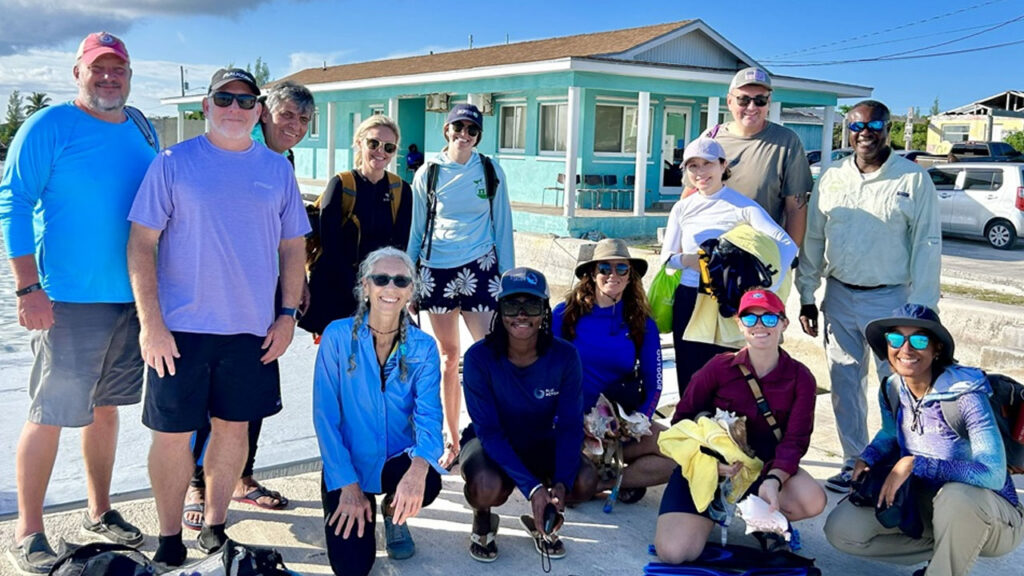
Florida Atlantic University’s Harbor Branch Oceanographic Institute has been awarded a grant from Blue Carbon Plus (BC+) to explore sustainable, market-driven aquaculture opportunities in The Bahamas and elsewhere. BC+ is a collaboration between Conservation International and The Nature Conservancy. Spearheaded through its Queen Conch Lab, FAU Harbor Branch has launched a 12-month feasibility study, funded by BC+, to assess the commercial viability of queen conch aquaculture.
The project aims to develop a scalable farming model capable of producing high-quality, marketable conch products while simultaneously enhancing the seagrass meadows that sustain this culturally and ecologically important Caribbean species.
The study titled, “Determining the Commercial Viability of Conch Aquaculture and its Seagrass Impact,” will evaluate how science-based aquaculture can strengthen both local economies and marine ecosystems.
Its three core objectives are to determine an optimal farm design and production model that maximizes efficiency and animal welfare across both hatchery and grow-out systems; to identify and assess the market for existing, new and value-added conch products; and to measure and document the environmental co-benefits of aquacultured conch restored to seagrass habitats, including their potential contribution to carbon sequestration.
To learn more, please visit FAU.