
A Peek into Testing and Trials at BASF | Nunhems
May 23, 2025 | 1 min to read
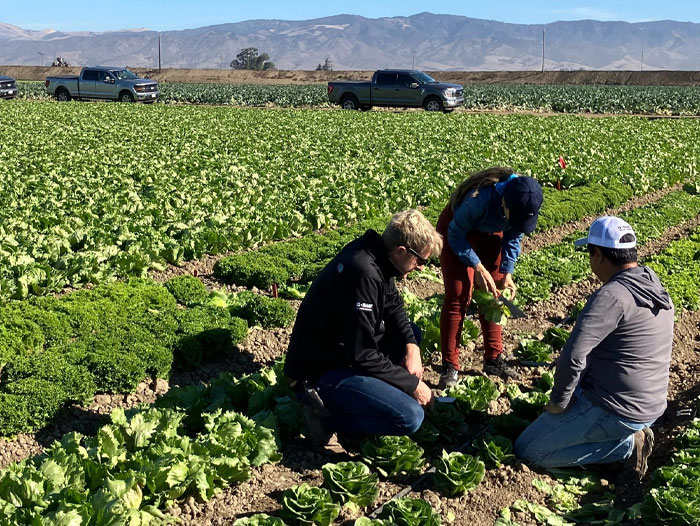
Did you know that the vegetables you eat are products of years of testing and research? There’s more that goes into growing vegetables than just planting seeds into the ground. Every variety must go through a series of trials to test the performance of a crop. These trials are run year-round, and continue from sowing to harvest, evaluating how a crop performs at every stage. For a crop like lettuce, growing time can vary between 60 and 100 days, and trial technicians check over the plants at least once a week.
The most important evaluation happens just before harvest, where trial technicians identify which variety might be the best choice for a grower. With the help of growers, we look for a few key characteristics to determine how well a crop is performing. These characteristics include type, adaptability, quality, yield, and disease resistance.
Visual Characteristics
Visual characteristics are all the physical features you can see right away: color, shape, and the type of plant. For example, these characteristics would determine whether a head of lettuce would be used in bagged lettuce you might buy at the grocery store, or if it would be chopped up for restaurants to use for salads or sandwiches.
To learn more, please visit BASF | Nunhems.