
Grana Padano — Cheese Course
September 9, 2010 | 2 min to read
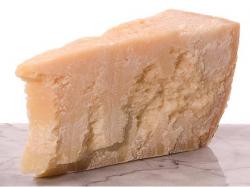
It's easy to understand why Grana Padano is Italy's most popular (and most consumed) hard cheese. Whether eaten on its own or grated over pasta and salad, its deep golden color, fruity aroma, firm texture loaded with deliciously crunchy amino acid crystals (concentration of calcium lactate) and sweet caramel-like taste make it irresistible.
Grana Padano's rich history is reflected in its complex array of flavors. The cheese dates back over a thousand years, to the 10th century, when Cistercian monks reclaimed the region around the Po River Valley in Northern Italy (often referred to as the "bread basket of Italy"), and, decided to produce a cheese that would stand the test of time. To learn more about this cheese's current production, we spoke to Lou Di Palo, owner of Di Palo's, the legendary Italian specialty food store, located on Grand Street in New York City.
"Apart from using modernized equipment, cheesemakers create Grana Padano roughly the same way it was first made hundreds of years ago," says Di Palo. Like the French A.O.C. label, Italy has D.O.P – Denominazione di Origine Protetta – which ensures the authenticity and quality of regional food products. Thanks to its D.O.P. label, P.D.O. in English (Protected Designation of Origin), Italy has preserved many of the cheesemaking traditions involved in producing Grana Padano. For instance, the cheese can only be produced north of the Po River, in the following five regions: Lombardy, Emilia Romagna (only the province of Piazenza), Veneto, Piedmont and Trentino (only the province of Trento). Hence, the name "Padano" meaning "of the Po River."
To read the rest of the story, please go to: Slash/Food.