
Shrimp, Sustainability, and Scale: ASC and SFP Launch Roadmap for Aquaculture Reform
August 13, 2025 | 9 min to read
The Aquaculture Stewardship Council (ASC) and Sustainable Fisheries Partnership (SFP) unveiled a transformative roadmap for sustainability in aquaculture, targeting the Indian shrimp sector in Andhra Pradesh. Funded by the Walmart Foundation, this initiative emphasizes collaboration among stakeholders to enhance environmental and social standards. By employing a landscape-level approach, the roadmap aims to drive systemic change, ensuring long-term resilience for shrimp farming and local communities, while providing actionable frameworks for global implementation.
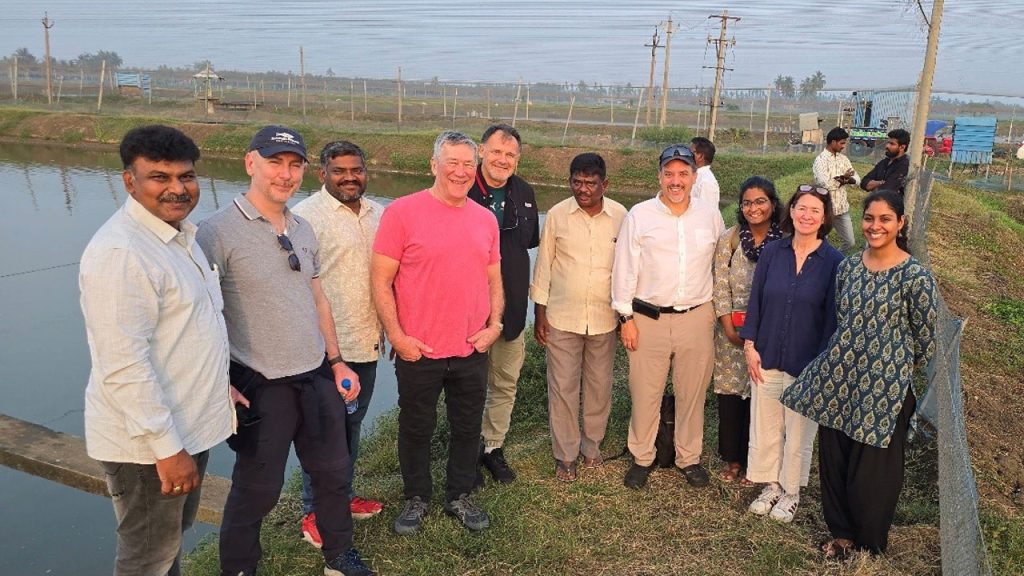
In a groundbreaking initiative to transform the future of global aquaculture, the Aquaculture Stewardship Council (ASC) and Sustainable Fisheries Partnership (SFP) released a new roadmap for landscape-level improvements in aquaculture.
Offering a practical pathway to scale sustainability in aquaculture by aligning and empowering stakeholders across regions through innovative, landscape-level solutions, the roadmap is presented in an easy-to-read interactive document.
The roadmap is the result of a Walmart Foundation grant to SFP focused on the Indian shrimp sector in the state of Andhra Pradesh, entitled ‘Building a foundation for landscape-level improvements in India’, part of a larger project on ‘Addressing the Carbon and Biodiversity Impacts of Aquaculture by Motivating Responsible Aquaculture Practices at Scale.’ SFP worked with ASC on the project, which combined an examination of landscape and jurisdictional initiatives with firsthand field learning from the Andhra Pradesh farmed shrimp industry to untangle the challenges to delivering incentives and driving environmental improvements at scale.
ASC and SFP bring complementary strengths and a shared commitment to achieving 100% responsibly managed seafood. Together, they are championing a new model for sustainability that draws from successful strategies in other commodities and sectors to enable effective aquaculture improvement at scale.
Jill Swasey, ASC Director of Impacts said, “Landscape approaches elevate the environmental and social performance of the region, reducing barriers and providing farmers with the opportunities to drive improvements, but this must rely on local expertise and organizations working in the sector. Demonstrating these collective improvements will deliver impacts at scale.”
Why a Landscape Approach Matters
Aquaculture is one of the world’s fastest-growing food sectors and holds tremendous potential to provide climate-smart, nutritious, and sustainable food. Yet only 51% of global aquaculture is currently certified or rated against recognized sustainability standards. Existing methods often fail to account for the fragmented nature of small-scale production systems, particularly in regions where producers lack clear land ownership, access to financing, and strong regulatory oversight.
The landscape approach provides a vital alternative. It emphasizes collaboration among diverse stakeholders—farmers, government bodies, NGOs, and the private sector—to raise the environmental and social baseline across shared geographic areas. This strategy does not replace certifications or independent projects but rather builds on them, creating a collective, adaptive, and inclusive model to drive measurable change.
A key focus of the work in Andhra Pradesh was collaboration with and support for local institutions and organizations. “Everything we do in-country should be done by local institutions, and there is tremendous local capacity in Andhra Pradesh,” said SFP Chief Executive Officer Jim Cannon. “Our role is just to connect the dots and work through established local players – they will be there long after you’re gone.”
Mr A.B.Ch.Mohan, Managing Partner, Seafood Solutions said “Our collaboration with the ASC and SFP team was a great experience, allowing us to build on our strengths and focus on the importance of effective stakeholder engagement and data synthesis for identifying actionable opportunities in shrimp aquaculture.
“Engaging with the Dakshin Foundation team also allowed us to better understand the perspectives of NGOs focused on social issues. We are eager to see this work put to use and hope it will lead to targeted recommendations and the piloting of sustainable solutions in collaboration with industry partners.”
Case in Point: Shrimp Farming in Andhra Pradesh
With shrimp now the most consumed seafood in the U.S. and among the top in the EU, demand continues to surge. India—particularly the state of Andhra Pradesh—has become a key player, producing nearly 1 million metric tons annually, primarily through smallholder farms under two hectares.
Andhra Pradesh’s stated ambition to increase its aquaculture area from 400,000 to 1 million acres by 2030 will bring rapid growth but also increased pressure on ecosystems and local communities. This roadmap uses shrimp farming in Andhra Pradesh as a pilot application, offering insights into how landscape-level approaches can address these complex challenges.
By integrating sustainability across the region and strengthening local governance, the roadmap ensures long-term resilience for the environment, the shrimp industry, and the communities that depend on it.
A Practical and Inclusive Roadmap
The roadmap includes:
- A Step-by-Step Framework: Practical guidance for developing and implementing landscape-level aquaculture improvement projects (AIPs), adaptable globally.
- Application Case Study: Lessons from implementing the approach in Andhra Pradesh.
- Multi-Stakeholder and Holistic Focus: Encouraging collaboration across the supply chain, civil society, and government.
- Integration with Global Frameworks: Drawing from leading bodies of work such as the Global Sustainable Aquaculture Roadmap and the Guidelines for Seafood Jurisdictional Initiatives.
Beyond the Farm: Toward Systemic Change
This initiative marks a shift from farm-level improvements to systems-level change, recognizing that shared landscapes—and the people and ecosystems within them—are interconnected. By aligning incentives, decreasing risk and input costs, and improving shrimp survival through better practices and technology, this model offers a scalable and impactful solution.
The roadmap is iterative, with each step designed to be refined and revisited as conditions evolve, ensuring long-term sustainability and inclusivity.
“In Andhra Pradesh, it was inspiring to see a coalition of local social, environmental, and aquaculture experts come together to lay the groundwork for holistic improvements to the farmed shrimp sector,” said SFP Aquaculture Information Manager Paul Bulcock. “I hope the insights they shared and the foundation they’ve built will be carried forward. Beyond that, I encourage other organizations to apply the Roadmap in different regions and commodities to identify what improvements are needed, where they’re needed, and who can drive them forward.”
About Sustainable Fisheries Partnership
Sustainable Fisheries Partnership (SFP) is working toward a world where all fisheries and aquaculture are improving and everyone has access to responsibly sourced and produced seafood. We work across the entire seafood value chain, from the world’s largest retailers to artisanal fishers, to find practical solutions to difficult problems. In everything we do, we focus on impact, to help ensure abundant fisheries, healthy marine and coastal ecosystems, and resilient fishing communities. Through our strong relationships with the seafood industry and the catch sector, we leverage the power of retailers, seafood buyers, and their supply chains to drive change in fisheries and aquaculture regions around the world. We bring industry together with NGOs, governments, fishers, and scientists, and then share our tools and expertise to help them find creative, collaborative solutions that work for everyone. Visit us at www.sustainablefish.org and follow us on LinkedIn, Instagram, and Facebook.
About the Aquaculture Stewardship Council (ASC)
ASC drives the world’s leading farmed seafood certification programme, accelerating progress towards environmental sustainability and social responsibility.
Our vision is a world where aquaculture plays a major role in supplying food and social benefits for humanity whilst minimising negative impacts on the environment.
The Standard is Changing… for fish, farm, planet and people.
The ASC Farm Standard addresses all key impacts of seafood farming, setting the standard for the industry globally and providing the highest assurance, integrity and transparency throughout the supply chain.
Our standards ensure that seafood with the ASC label has been farmed with care.
Choose ASC for Change.