
Seafood Europe Calls for a Stronger Industrial Dimension in Vision 2040
October 28, 2026 | 2 min to read
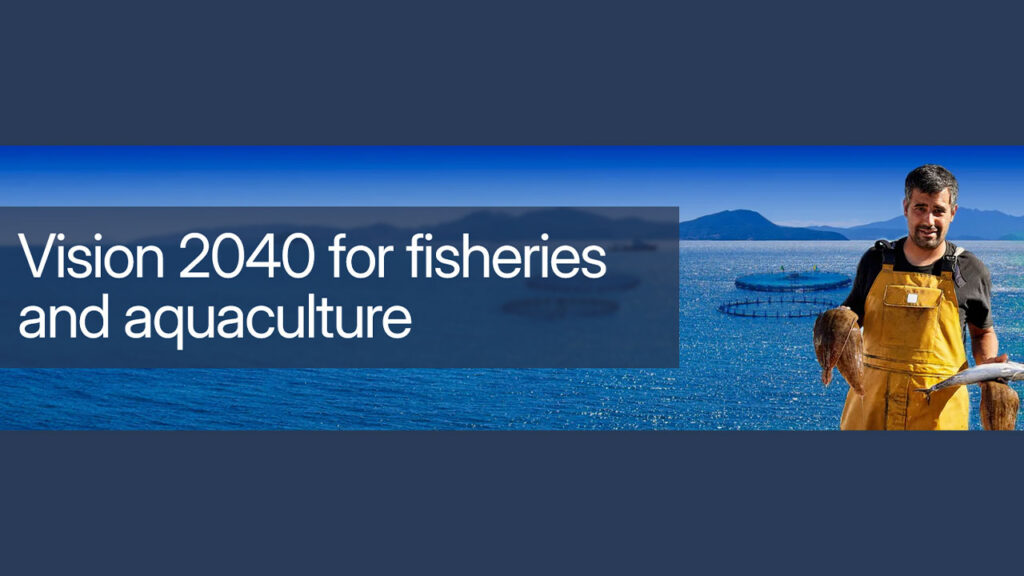
BRUSSELS — Seafood Europe welcomes the European Commission’s publication of Vision 2040 for Fisheries and Aquaculture and its objective of building a resilient, competitive, and sustainable European aquatic food system.
> Never miss an update, subscribe to our newsletter today!
The Vision recognizes the importance of global value chains, open trade, diversified supply, and the contribution of aquatic foods to European food and nutritional security. It also acknowledges that more than 60% of EU aquatic food consumption is imported and that access to key resources will remain a central challenge through 2040.
For the EU seafood processing and trading industry, this structural dependence on international supply has significant industrial implications.
“Ensuring that Europe remains a competitive place to process aquatic food is an essential condition for achieving the Union’s objectives on food security, strategic resilience, and sustainable aquatic value chains,” said Guus Pastoor, president of Seafood Europe.
The EU seafood processing industry represents approximately 102,000 direct full-time-equivalent jobs and €33.5 billion in turnover, while supporting significant additional economic activity and employment across logistics, cold storage, transport, and related services.
Raw materials account for approximately 71% of the industry’s production costs, leaving the sector particularly exposed to changes in international supply, energy costs, trade conditions, and regulatory requirements.
Seafood Europe believes the implementation of Vision 2040 should account for these combined pressures, particularly amid ongoing geopolitical uncertainty, renewed inflationary pressure, and elevated energy costs.
The association supports the Vision’s objectives for sustainability, traceability, and supply chain resilience. However, it cautions that these objectives must be pursued alongside competitiveness.
“In the present economic and geopolitical environment, competitiveness cannot be treated as the residual outcome after sustainability, trade, control, and external-policy objectives have been decided separately. It must be a design condition applied across them,” said Katarina Sipic, secretary general of Seafood Europe.
Seafood Europe has therefore asked Commissioner Costas Kadis to give the processing and trading industry a clearer role in implementing Vision 2040.
The association proposes establishing a dedicated, cross-Commission workstream on seafood processing competitiveness and raw material security, along with a cumulative competitiveness assessment for measures affecting the aquatic food value chain. Such an assessment should consider whether the overall policy framework strengthens or weakens the economic case for processing and adding value within the European Union.
“The core objective should remain to reinforce European industrial capacity without lowering environmental, social, and food safety standards. In addition, Vision 2040 should consider where the value associated with supplying the European market will be created, instead of simply looking into how seafood in Europe should be produced and sourced,” Pastoor concluded.
Seafood Europe stands ready to work with the European Commission and relevant services to ensure that sustainability, resilience, consumer affordability, and industrial competitiveness advance together.