
Musholm Commits to Ambitious Nature Goals With Support From BioMar’s Blue IMPACT Feed Program
September 21, 2026 | 3 min to read
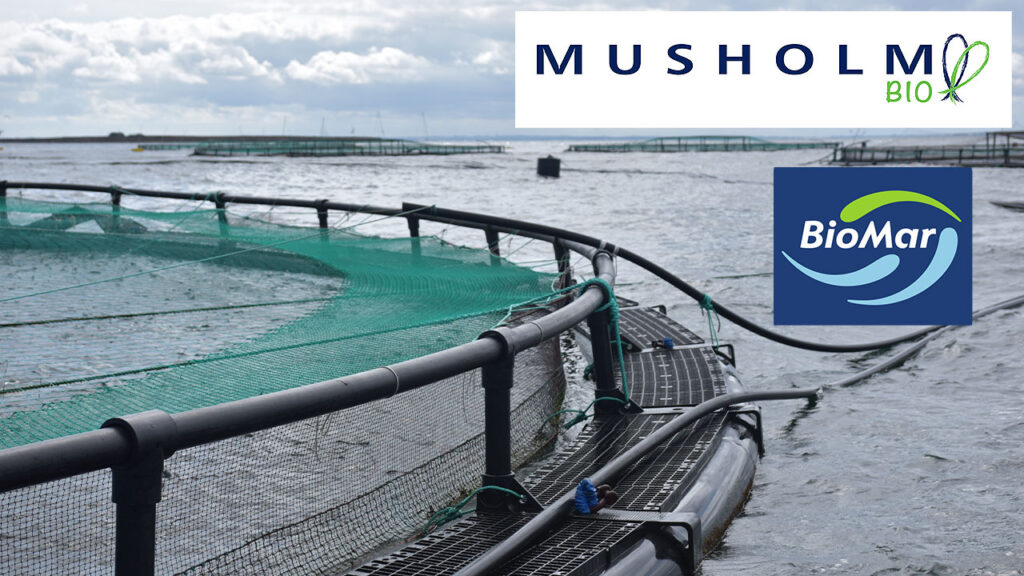
Musholm is making history as the first aquaculture company to adopt science based targets for nature and is setting concrete goals to reduce pressure on wild fish stocks, restore marine habitats, and protect biodiversity.
As a participant in the Science Based Targets Network (SBTN) Ocean Hub pilot project, the Danish trout producer Musholm is taking the next step in its environmental efforts. Together with BioMar, Musholm is translating its understanding of the company’s impact on and dependence on nature into concrete goals and actions across the value chain.
Three Specific Goals for Nature:
1. Reduce Pressure on Wild Fish Stocks
Musholm aims to achieve a 52.94% reduction in the use of marine raw materials derived from blue whiting by 2029, using 2025 as the baseline year.
By 2031, Musholm will also reduce its dependence on marine raw materials from wild-caught fish through increased use of circular and alternative raw materials. The goal is supported by BioMar Blue IMPACT feed.
2. Restore Marine Habitats
Musholm plans to restore 42 hectares of rock reefs and 14 hectares of blue mussel reefs by the end of 2029 at Storebælt Klint in Musholm Bay, as part of a project in collaboration with the Municipality of Slagelse.
At the same time, Musholm will reduce the use of net impregnation at the company’s three aquaculture farms by 2030 at the latest.
3. Reduce the Risk of Impact on Endangered and Protected Species
By 2029 at the latest, Musholm and BioMar will strengthen traceability, monitoring, and mitigation efforts in selected fisheries that supply marine raw materials for aquaculture feed.
These efforts are intended to enhance understanding of biodiversity-related risks and improve their management throughout the supply chain.
From Ambition to Documented Action
Musholm’s environmental goals require action both at the aquaculture farms and further back in the value chain. That is why the company works closely with BioMar on targeted sourcing, raw material traceability, and the development of feed solutions with a lower environmental impact.
Through BioMar’s Blue IMPACT program, Musholm gains access to data, analyses, and documentation that enable it to track developments and document progress over time.
“When Musholm sets ambitious environmental goals, strong partnerships throughout our value chain are essential. We want to take responsibility locally, where we raise our fish, but also in the parts of the world where the ingredients for our feed come from, because our demand also affects nature there,” says Thorbjørn Harkamp, CEO of Musholm A/S.
Working Together for the Future of Aquaculture
BioMar’s Blue IMPACT feed program supports fish farmers who want greater transparency and continuous improvements in the environmental footprint of their feed.
“When we talk about nature, it’s important to look at the entire value chain and not just what happens at the farm itself. Feed plays a crucial role, and through our work with raw materials, traceability, and feed formulation, we can develop solutions that consider the customer’s specific nature and sustainability requirements.
“At the same time, through Blue IMPACT, we can provide the documentation and insights that make it possible to track progress over time. We are proud to collaborate with Musholm and contribute the knowledge, documentation, and feed solutions that can help turn these ambitions into reality,” said Anders Brandt-Clausen, BioMar A/S.