
The Art Of The Artichoke
March 15, 2011 | 2 min to read
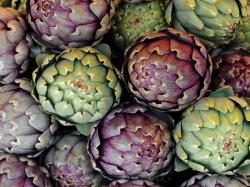
Sure, the brave man who first dared to eat an oyster is a culinary hero, but let's give a shout-out to the adventurous soul who first tackled an artichoke, battling its tough, prickle-topped leaves and going mano-a-mano with its choke, the fuzz-ball at its center that's capable of living up to its name.
One can chalk the virgin degustation up to wild hunger, but it's fun to think that when our man returned for seconds it was because he had excellent taste, albeit with a quirky bent. An artichoke has a singular flavor that's a fooler. It starts out simply nutty and sweet and then, bite after bite, builds until it seems to fill your mouth, leaving not a speck of space for anything else that isn't sharp, acidic, citrusy or just plain pushy.
In Europe, the vegetable (really a flower) is treated like a rock star and its early-spring appearance gets a welcome worthy of Persephone, while in Castroville, Calif., the artichoke capital of America, there's an annual festival with a grand parade and nonstop music. For the rest of us, there's the supermarket, where we can count on finding two kinds of artichokes: the globe, which is large, green and bulbous; and the baby, which is small, pointy, usually chokeless and good-to-go raw.
Big or small, look for artichokes with tightly closed leaves and be prepared to do a little trimming and scooping to get to the choicest morsel, the heart. The job's quick, easy and oddly satisfying—you can go from novice to pro in a couple of tries—though we dare you to stop at a couple.
To read the rest of the story, please go to: Wall Street Journal