
Screening Fresh Oranges With UV: Study Pinpoints New Value Of Detection Tactic
August 16, 2013 | 1 min to read
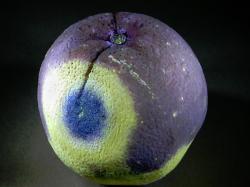
Fresh, deliciously sweet navel oranges, on display at your local supermarket, may have been quickly inspected with ultraviolet (UV) light when they were still at the packinghouse. Usually, the purpose of this special sorting and screening is to see if circular spots—which glow a bright, fluorescent yellow and may be about the size of a quarter or larger—show up on the fruit’s peel.
More often than not, these spots, which scientists refer to as “lesions,” are telltale indicators of the presence of microbes that cause decay, namely Penicillium italicum, responsible for blue mold, or P. digitatum, the culprit behind green mold.
It isn’t the microbes that are fluorescing under the packinghouse UV lamps. Instead, it’s tangeritin, a natural compound in citrus peel oil. When the peel is damaged, such as by decay, tangeritin moves closer to the peel surface, or perhaps seeps out of it, becoming easier for UV to detect.
The characteristic “fluorescence signature” of the decay lesions is easily recognized by packing-line workers who monitor the fruit as it speeds past them on a conveyor belt. All navel oranges that display this distinctive pattern are promptly culled—an established practice that dates back more than 50 years in California citrus packinghouses.
To read the rest of the story, please go to: USDA Agricultural Research Service
