
Meet Switzerland's Breakaway Cheesemakers
December 20, 2016 | 2 min to read
Every summer day, cheesemaker Stéphane Henchoz and his 55 cows have a routine.
It begins at 5:30 a.m. in his seasonal chalet high in the Swiss Alps, when Henchoz wakes up and turns on the 20-watt bulb in his kitchen. (Utility wires are nonexistent here at 5,800 feet, so a small generator provides the power.) After a breakfast of bread and heavy cream that he eats straight from the pot, Henchoz heads off to round up the cows. The animals graze and sleep farther up the mountain, in meadows blanketed with shaggy wild grasses and iridescent wildflowers, some of which grow knee-high. Once Henchoz and his border collie have guided the herd back into the stables, he and his girlfriend, Natasha, begin milking. They fill a huge copper vat that hangs over an open flame, and spend the next hour heating, stirring, and straining, until the liquid is transformed into three 50-pound wheels of L'Etivaz cheese.
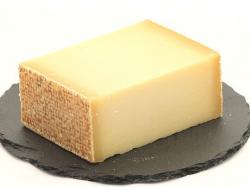
If you've ever tasted L'Etivaz, you might have guessed that it's crafted over a wood fire using a technique that has hardly changed for centuries. A little bit smoky and a little bit flowery, this rich, raw-milk cheese is an old-school cousin of Gruyère, the better-known Alpine brand made in much larger quantities a few miles up the road. In 1932, a group of families from the hamlet of L'Etivaz (from where the cheese takes its name) founded their own producer's cooperative; later they broke off from the Gruyère juggernaut and established their own strict standards, and in 1999 L'Etivaz became the first food product in Switzerland to be granted A.O.C. status (it's now called A.O.P., for appellation d'origine protégée). For Henchoz and his fellow L'Etivaz producers, this means adhering to exacting protocols.
To read the rest of the story, please go to: Saveur