
Walking A Mile In Millers' & Bakers' Shoes
May 8, 2015 | 2 min to read
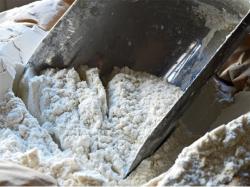
What if you went clothes shopping, and there were no standard sizes? You might have to paw through racks and run in and out of the dressing room for hours, to find a shirt that fit. Then, after a few days of wearing your new shirt you’d throw it in the wash – but there’d be no standard label identifying whether it’s wool, cotton, silk or synthetic, so you’d likely ruin your new purchase. We take industry and regulatory standards for granted – until we realize what havoc can result when they’re not there.
The milling and baking community, it turns out, has 358 approved methods and standards for everything from how to judge the baking quality of biscuit flour, to how to assess the particle size of flour. But “almost all of them apply to refined flour,” as I learned last week from Art Bettge at a conference called “Whole Grains… the Next Super Food” (the AACCI Milling & Baking Division Spring Technical Conference). Bettge, who worked at the USDA’s Western Wheat Quality Lab for 31 years before starting his own consulting firm, went on to explain that “a big variety of flours are all labeled ‘whole wheat flour’” even though they may have very different properties.
In the world of refined flour, bakers and millers have – over the past century –developed a finely-nuanced vocabulary for communicating with each other about just what kind of flour they need for a particular product, including protein levels, moisture levels, particle size and more. If you run a cracker factory, or make hamburger buns, you don’t just order “flour” and take whatever comes. Instead, you carefully specify your flour, and both buyer and seller can carry out tests to make sure the flour meets that spec.
To read the rest of the story, please go to: Oldways Preservation Trust/Whole Grains Council