
Cairnspring Mills, CTUIR and Tribal Partners Reshape the Future of Flour
September 22, 2025 | 5 min to read
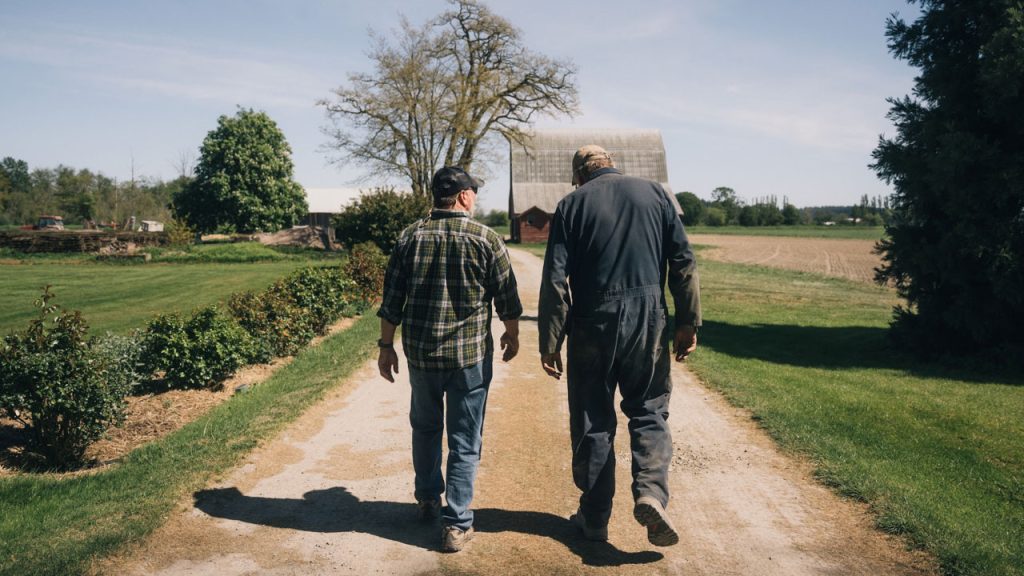
A rare partnership shows how tribal investment in food systems can drive resilience and prosperity for communities nationwide
BURLINGTON, Wash. – Cairnspring Mills, the Washington-based craft flour company redefining a $23 billion industry, announced it will move forward with its second facility, located on the Umatilla Indian Reservation in Pendleton, Oregon, at the base of The Blue Mountains. Developed in partnership with the Confederated Tribes of the Umatilla Indian Reservation (CTUIR), the Blue Mountain Mill represents a landmark collaboration that combines regenerative agriculture with tribal-led financing to create a new model for regional food economies. A partnership celebration to officially mark the project kick-off will be held October 1.
“This isn’t just about building a mill, it’s about rewriting the future of one of our most essential crops,” said Kevin Morse, Co-Founder & CEO of Cairnspring Mills. “With Blue Mountain alongside our flagship mill in Washington’s Skagit County, we can meet national demand while staying true to our roots—supporting farmers, revitalizing rural economies, and proving that staple crops like wheat can drive prosperity, flavor, and real change in the food system.”
CTUIR made a $5 million equity investment in the Blue Mountain Mill, securing both ownership in Cairnspring’s growth and multiple benefits for the tribe. This marks the first time CTUIR has made an equity investment in a company, representing a significant milestone in the tribe’s economic development strategy. The partnership includes a 50-year land lease for sustained income generation and creates a platform to advance economic development and food sovereignty.
“Wheat isn’t indigenous to our land, but it has sustained our people for more than a century. With the Blue Mountain Mill, we can shape it into something better—producing nutrient-rich flour and strengthening a resilient supply chain that supports not only our community, but rural communities nationwide. This is part of a broader movement among tribes to build lasting food security and prosperity for generations to come,” said Bill Tovey, director of the CTUIR Department of Economic & Community Development.
Cairnspring’s Blue Mountain Mill is partially funded through an intricate financing coalition led by Native institutions. Mission Driven Finance, an impact investment firm building inclusive economic pathways co-founded and co-led by a Native Hawaiian woman of color, collaboratively structured a loan with eight Native Community Development Financial Institutions (CDFIs) to fill a key piece of the project capital. The creative financing approach for Indigenous economic development builds a model for how future food and infrastructure projects can be structured. Cairnspring Mills has also secured capital commitments from Peter Buffett’s NoVo Foundation, Terra Regenerative and other prominent institutional and impact investors.
“This financing shows what happens when Native lending institutions are empowered to lead,” said Ted Piccolo, Director of Indigenous Futures at Mission Driven Finance. “It’s strengthening local economies while reconnecting us to the spirit of trade and exchange that has always been central to Native communities.”
A century ago, there were more than 20,000 flour mills across the U.S.; today, just ten companies control nearly 90% of milling. Cairnspring’s Blue Mountain signals the return of a decentralized, community-rooted flour economy at a human scale. Just as Blue Bottle redefined coffee and Dogfish Head elevated beer, Cairnspring is proving that flour can become the next great craft movement. The Blue Mountain Mill will expand Cairnspring’s production capacity twelvefold—from under 7 million pounds to 110 million pounds annually—and create more than 20 local living-wage jobs, positioning the Pacific Northwest at the forefront of a new craft flour economy.
Cairnspring produces regenerative flour that is identity-preserved, terroir-driven, and fully traceable to the farm. By sourcing grain directly from Pacific Northwest farmers using regenerative growing methods, and stone-milling it in small batches to retain the bran and germ, Cairnspring delivers flour that is naturally nutritious, alive with flavor, and transformative in the hands of bakers. World-class bakers agree: “The flour from Cairnspring Mills is the best flour we have ever used. We use it almost exclusively,” said Chad Robertson, co-founder of Tartine.
By paying farmers premiums and keeping every lot traceable back to its grower, Cairnspring has built a model that values soil health, terroir, and farm viability—proving that regenerative staple crops can deliver both taste and economic security. Even at this scale, Cairnspring operates at a human level that allows them to know every farmer, walk every field, and remain accessible to their customers and community.
That balance has built a loyal network of customers both large and small, from local bakeries to Patagonia Provisions and leading institutional foodservice partners. Many have already secured significant volume at the new facility, with additional capacity still available. Along with its flagship Skagit facility and future sites planned in Maryland and Colorado, Cairnspring is building a national milling network that shows flour can scale without compromise.
About Cairnspring Mills
Cairnspring Mills is pioneering the craft flour movement with a mission to rebuild food systems, support farmers, and nourish communities with clean, healthy, flavorful grains and flour. Founded in Washington’s Skagit Valley in 2016, the company partners directly with Pacific Northwest growers who use regenerative practices that restore soil health and long-term farm viability. Every lot of grain is identity-preserved, stone-milled in small batches, and crafted to retain the bran and germ, resulting in flour that is fresher, naturally nutritious, and alive with flavor. By proving flour can be full of flavor and economically resilient, Cairnspring offers a new model for 21st-century food production—one that regionalizes supply chains, restores ecosystems, contributes to community resilience and shares value more equitably across farmers, bakers, and communities. For more information, visit cairnspring.com or follow along on Instagram.
About CTUIR: The Confederated Tribes of the Umatilla Indian Reservation is comprised of the Cayuse, Walla Walla and Umatilla Tribes, and formed under the Treaty of 1855 at the Walla Walla Valley, 12 Stat. 945. In 1949, the Tribes adopted a constitutional form of government to protect, preserve and enhance the reserved treaty rights guaranteed under federal law.