
U.S. Farm Leaders Voice Support for Ending Failed Tomato Trade Agreement
July 7, 2025 | 3 min to read
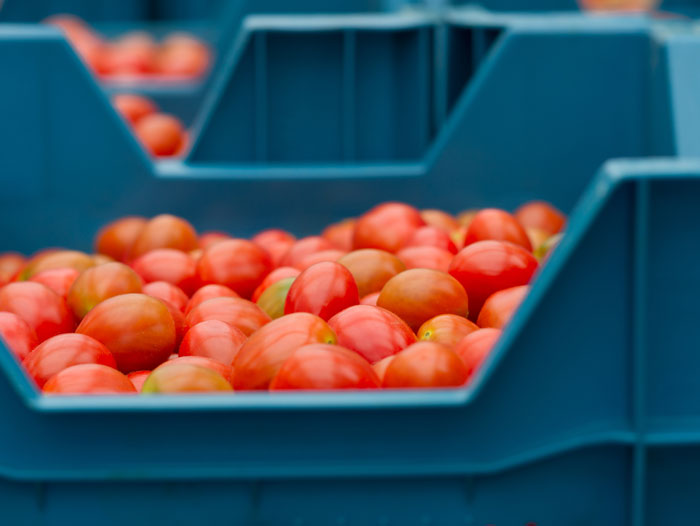
Agriculture Leaders Across the Country Warn Agreement Has Devastated American Tomato Farmers and Undermined Fair Trade
WASHINGTON, D.C. — Agriculture leaders from across the country are voicing strong support for Commerce Secretary Howard Lutnick’s decision to terminate the U.S.-Mexico Tomato Suspension Agreement (TSA), citing its failure to prevent Mexican producers from dumping illegally priced tomatoes into the U.S. market.
In letters submitted ahead of the agreement’s July 14 termination date, state farm bureaus and specialty crop associations representing growers in key tomato-producing states warn that the TSA has consistently harmed American producers while failing to enforce fair trade protections.
Eric Mayberry, President of the Tennessee Farm Bureau Federation, wrote that five separate suspension agreements over nearly three decades have done little to stop the influx of unfairly traded Mexican tomatoes. “In this time frame, Mexican tomato imports have increased nearly 400%,” Mayberry explains. “Simultaneously, the U.S. market share has decreased from 80% to approximately 30%.”
Agriculture leaders argue that ending the agreement is critical to restoring market fairness and preventing the further collapse of the U.S. tomato industry. A ruling from the U.S. Court of International Trade in April reaffirmed the Commerce Department’s finding that Mexican tomato producers were dumping their production into the United States. The U.S. International Trade Commission also voted unanimously that this dumping was injuring American tomato farmers.
Many farm bureaus also raised concerns about renewed efforts by Mexican officials to renegotiate the TSA. Allen Carter, President of the New Jersey Farm Bureau, cautioned that such negotiations overlook the “history of failure and ongoing harm” caused by previous renegotiation efforts. Renegotiation, he warned, would “only perpetuate an unenforceable strategy, further eroding our domestic industry.”
Greg Bird, Executive Director of the Michigan Vegetable Council, emphasized the urgency of ending the agreement: “Despite the Commerce Department’s enforcement efforts, the 2019 Agreement has been exploited by Mexican exporters to continue dumping practices that are devastating American tomato producers. Termination will not stop Mexican tomatoes from entering the U.S. They will just need to be sold at fair prices.”
In addition to harming domestic growers, farm leaders warn that continuing the agreement threatens the stability of the U.S. food supply and, by extension, national security. “If we lose our domestic fruit and vegetable producers, we lose more than an industry—we lose control over our food system,” said Wilton Simpson, Florida Commissioner of Agriculture, in his letter. “A nation that cannot feed itself is a nation that cannot defend itself.”
About the Florida Tomato Exchange
The member companies of the Florida Tomato Exchange produce over 90 percent of the tomatoes grown in Florida and are among the largest producers of tomatoes in California, Georgia, New Jersey, North Carolina, South Carolina, Tennessee, and Virginia. FTE member companies produce approximately 50 percent of the fresh-market tomatoes grown in the U.S.