
CFIA: Various Brands of Gorgonzola Truffle Cheese Recalled due to Listeria monocytogenes
December 29, 2023 | 2 min to read
Summary
Product – Various brands of gorgonzola truffle cheese
Issue – Food – Microbial Contamination – Listeria
What to do – Do not consume, use, sell, serve or distribute recalled products
Distribution – Alberta, British Columbia

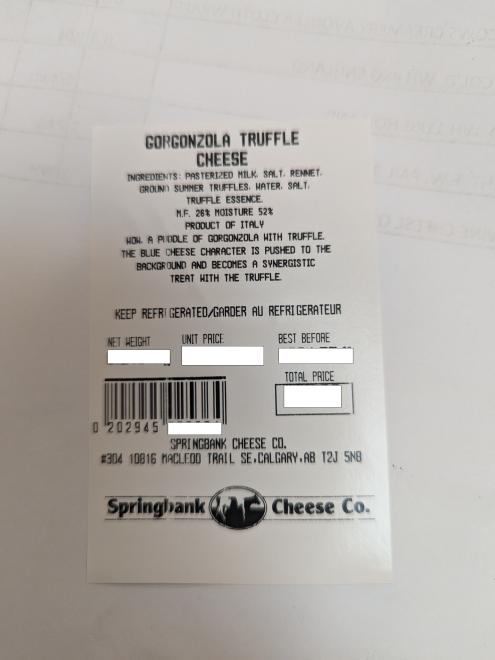
Affected products
| Brand | Product | Size | UPC | Codes |
|---|---|---|---|---|
| Le Grand Fromage | Gorgonzola Truffle Italian Cheese | Variable | Starting with 0200250 | All units sold at Le Grand Fromage 672E 2nd Ave, Box 1614 Fernie BC, from December 12 to 24, 2023 inclusively.All units sold at Le Grand Fromage 320 Vernon St. Unit 1, Nelson BC, from December 12 to 24, 2023 inclusively |
| Springbank Cheese Co. | Gorgonzola Truffle Cheese | Variable | Starting with 0 202945 | All units sold at Springbank Cheese Co. 7422 Crowfoot Rd NW, Calgary AB, from December 4 to 24, 2023 inclusively.All units sold at Springbank Cheese Co. 10816 Macleod Trail Unit 304, Calgary AB, from December 4 to 24, 2023 inclusively. |
Issue
The affected products are being recalled from the marketplace due to possible Listeria monocytogenes contamination.
What you should do
| If you think you became sick from consuming a recalled product, contact your healthcare providerCheck to see if you have recalled productsDo not consume, serve, use, sell, or distribute recalled productsRecalled products should be thrown out or returned to the location where they were purchasedFood contaminated with Listeria monocytogenes may not look or smell spoiled but can still make you sick. Symptoms can include vomiting, nausea, persistent fever, muscle aches, severe headache and neck stiffness. Pregnant women, the elderly and people with weakened immune systems are particularly at risk. Although infected pregnant women may experience only mild, flu-like symptoms, the infection can lead to premature delivery, infection of the newborn or even stillbirth. In severe cases of illness, people may die. |